
Ningbo, Zhejiang, on the East China Sea. A small village with a population of less than 900 and an area of less than 2 square kilometers has generated impressive economic performance: in 2025, regional GDP reached 13.535 billion yuan, villagers'per capita net income 89,000 yuan. Every household lives in a villa, everyone receives a monthly welfare fund of 1,500 yuan, and old-age care, medical care and other insurance cover the whole life cycle. It has won more than 70 honors, including the Global 500 Roll of Honour for Environmental Achievement and the World Top 10 Harmonious Villages and national 5A-level tourist attraction, making this "pocket-sized village" shine globally.
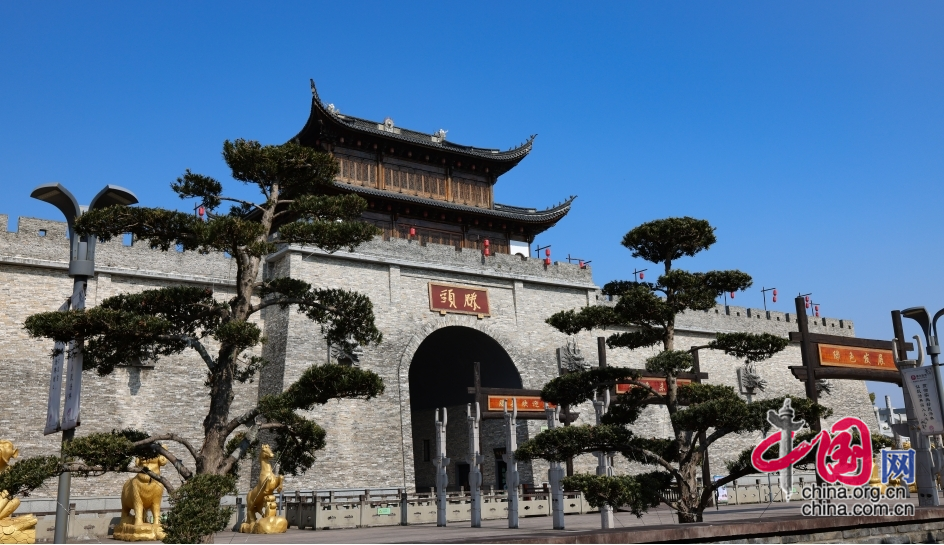
A scenic spot in Tengtou Village. Photo by Dong Ning, a journalist from china.com.cn
At the start of 2026, a delegation from the China Foreign Languages Publishing Administration visited Tengtou Village. Amid white walls and black tiles, spring is in full bloom. The air monitoring station displays real-time data: PM2.5 below 10 micrograms per cubic meter, green coverage rate reaching 70%.
Urban people envy this countryside: it is not only livable but simply a "dream paradise on earth".
Where does the miracle come from? Not from nature, but from generations of Tengtou people plowing for common prosperity through reform. Party building, green development, common prosperity — Tengtou Village has blazed a rural path to common prosperity under Chinese-style modernization.
From one village's transformation to sharing experiences across the country, Tengtou's story inspires thousands of villages like spring breeze.
Tengtou spirit highlighted during a mission entrustment at a critical and difficult moment
The story begins with a mission entrustment at a critical and difficult moment.
At the end of 2016, then Party Secretary Fu Qiping suddenly fell ill, leaving Tengtou Village in turmoil and development stagnant.
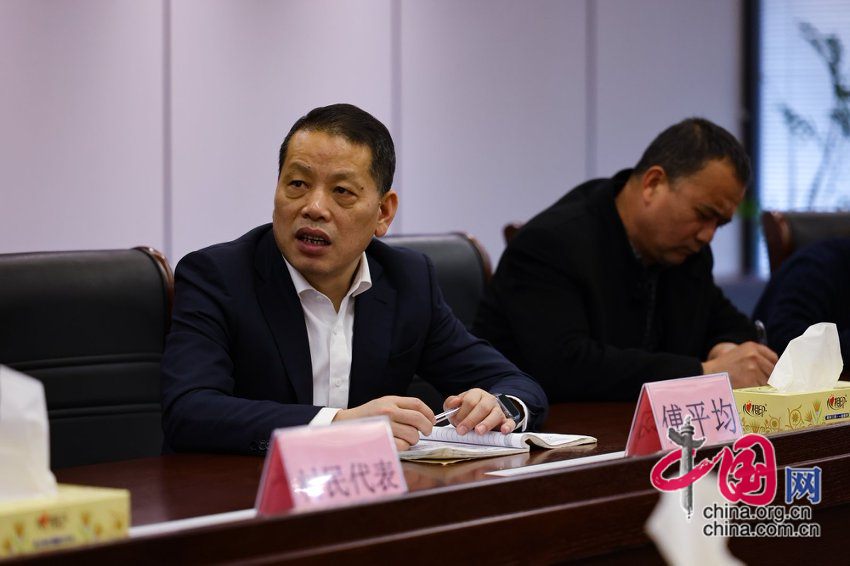
Fu Pingjun, current Party Secretary of Tengtou Village. Photo by Dong Ning, china.com.cn
"At that time, I took over amid a crisis. The first priority was to stabilize the morale of the people," recalled current Party Secretary Fu Pingjun. He took two actions: first, solemnly promising at the villagers'meeting that all benefits set by the former Party secretary would remain unchanged; second, "vowing to complete tasks".
"I made a solemn pledge at the meeting: complete a certain number of tasks within a specified time. If not, I won't cut my hair!" This simple oath quickly aroused villagers' expectations.
During that period, Fu Pingjun slept only four or five hours a day and lost more than 15 kilograms in a few months, but the results were obvious: the rural sightseeing train was officially in operation in 60 days; the agricultural innovation center completed construction in 150 days; the flagship store of the ecological farm and boutique hotel were completed and trial-operated in 250 days... Within a few months, projects were launched and people's hearts reunited.
Looking back, this mission entrustment is not the whole of Tengtou's development history, but it reflects Tengtou's simple yet powerful spirit — "Plowing forward to the end, innovating endlessly".
From Poor Village to Common Prosperity Village, Staying Ahead
Once upon a time, the saying "Uneven fields, rough roads, grain yield only 200 catties per mu" fully described Tengtou's poverty. Villagers lived a life of food scarcity on thin fields.
In the 1960s and 1970s, then Party Secretary Fu Jialiang turned the soil with a plow, carrying soil from afar to improve the land and reclaim farmland, laying a solid material foundation for Tengtou Village. At the beginning of reform and opening up, Tengtou sought truth from facts, withstood pressure and firmly developed the collective economy. In 1990, the "garden-style village" plan was released: agricultural demonstration park, entertainment area, sightseeing area, residential area — clear zoning, and the "Blue Sky, Clear Water, Green Land" projects were vigorously promoted.
In May 2003, General Secretary Xi Jinping, then Secretary of Zhejiang Provincial Party Committee, visited Tengtou Village. Upon learning that the village had established an environmental protection committee as early as 1993, he said thoughtfully: "If a person keeps his home clean and beautiful, his confidence in life will also increase. People change the environment, and the environment in turn influences people."
In June of that year, under Xi's personal planning, deployment and promotion, Zhejiang Province fully launched the Green Rural Revival Program: selecting about 10,000 administrative villages from nearly 40,000 villages in Zhejiang for comprehensive renovation, and building about 1,000 central villages into well-off demonstration villages.
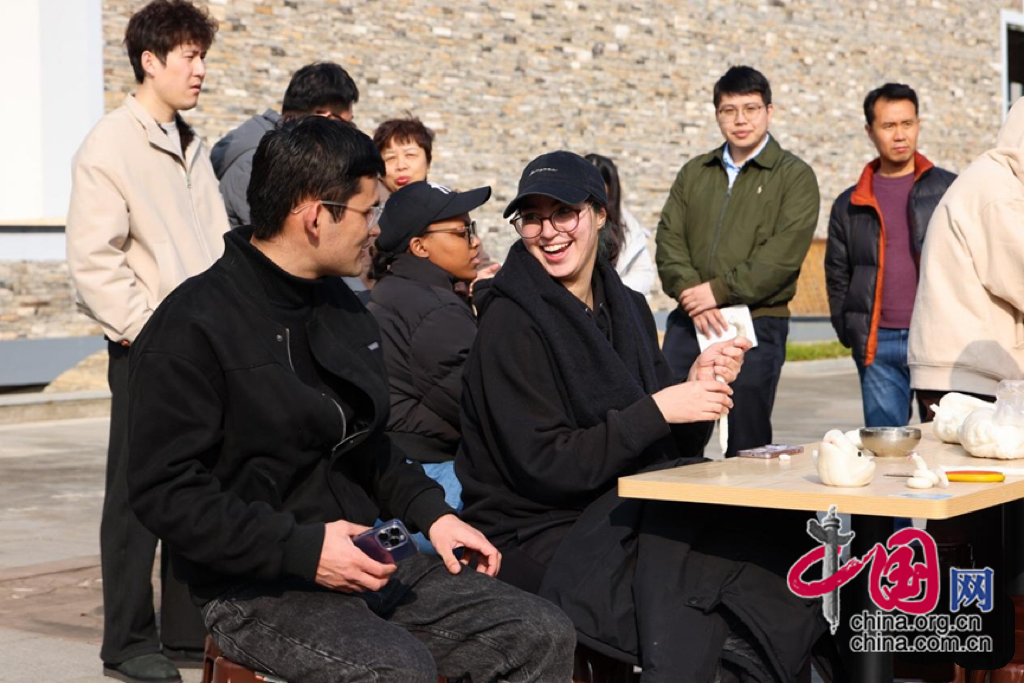
During the Spring Festival, several foreign tourists visited Tengtou Village to experience rice cake making. Photo by Dong Ning, china.com.cn
Taking the lead in implementing the Green Rural Revival Program, Tengtou naturally set an example. Building on the beautiful scenery of clear canals winding through the village, green trees and fragrant fruits, Tengtou strived to explore unique industry and tourism. In 2007, at the 7th UN Global Forum, Tengtou was named one of the "World Top 10 Harmonious Villages", the only village in China to receive this honor, and has since become a famous brand for the world to understand China's rural development. In 2010, Tengtou was rated the only 5A-level tourist attraction built by a single village in China.
All the way forward, what is the driving force?
Fu Pingjun said firmly: "The leadership role of Party building is the key! We have 258 Party members taking the lead, practicing General Secretary Xi Jinping's instructions: It's not easy to remain outstanding all the time, and efforts should be made to stay ahead."
Ecological Tengtou Is Not Only About Environment
"Harmony between humanity and nature" is an essential requirement of Chinese-style modernization.
In the wave of industrialization, environmental degradation often accompanies economic development. The most prominent feature of Western industrialization is the path of "pollute first, treat later": ignoring environmental costs in pursuit of growth, then investing heavily in restoration after becoming wealthy. This path was once summarized as "pollution is inevitable in modernization".
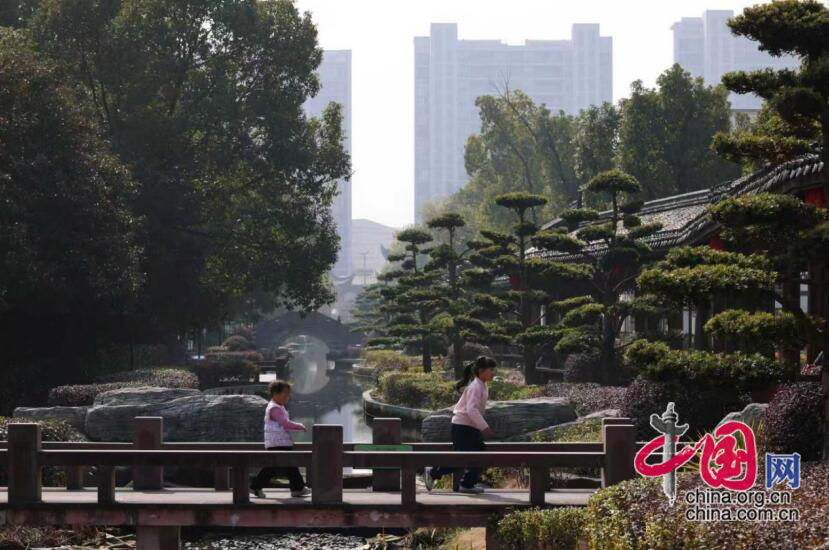
A park in Tengtou Village. Photo by Dong Ning, china.com.cn
From the very beginning, Tengtou adhered to the firm philosophy of "better lucid waters and lush mountains than gold and silver mountains". This eco-priority development principle originated from villagers' overseas inspection in the early years. After witnessing the environmental damage of London and the beauty of Singapore's garden city, they deeply realized that only eternal mountains and clear waters are the real gold and silver mountains for future generations.
This adherence to "lucid waters and lush mountains" allowed Tengtou to bypass the traditional "pollute first, treat later" path, achieving the transformation from "lucid waters and lush mountains are better than gold and silver mountains" to "lucid waters and lush mountains are gold and silver mountains". In 1993, Tengtou was awarded the Global 500 Roll of Honour for Environmental Achievement, and eco-based development became a reality.
For decades, Tengtou has adhered to this philosophy and gradually institutionalized it: building household biogas digesters in 1978; completing a village-wide large-scale biogas project in 1991; establishing the country's first village-level environmental protection committee in 1993, with a one-vote veto over pollution-prone projects. Development must balance economic and ecological accounts — this is not an empty slogan in Tengtou, but a development philosophy embedded in village rules and project red lines, passed down from generation to generation.
"It's easy to protect greenery, hard to leverage it." Tengtou's approach is to transform ecological advantages into development momentum, turning green resources into real economic output. During a recent visit, reporters witnessed a discussion on installing clean energy lamps in key areas of the village.
"After clean energy is used this year, the village's electricity costs will drop significantly," said Zhong Shuijun, director of Tengtou's publicity office. "Once operational, it will save more than 100,000 yuan annually for an enterprise with electricity consumption exceeding 600,000 kWh, and ordinary villagers' household electricity expenses will also decrease noticeably."
People often describe Tengtou with "green", but a closer look reveals: an eco-friendly Tengtou is far more than green — it's a systematic wisdom embedded in production, life and governance.
"One prosperous village is not enough; prosperity shared by all villages is true prosperity."
Common prosperity for all people is a key feature of Chinese-style modernization.
Fu Pingjun's name is very representative of common prosperity. He said: "Our three generations of Party secretaries: Secretary Fu Jialiang's name means 'good grain' to feed us; Secretary Fu Qiping represents the steady development of our collective enterprises; my name 'Pingjun' means 'average', not egalitarianism, but common prosperity."
The concept of "One prosperous village is not enough; prosperity shared by all villages is true prosperity" is printed everywhere in Tengtou Village. Deeply understanding this essential requirement of Chinese-style modernization, Tengtou Village has actively transformed development achievements into a sharing mechanism after achieving its own prosperity, promoting a leap from direct assistance to industry-led common prosperity.
In 2019, Tengtou Village established the country's first village-level Rural Revitalization Academy. Different from traditional empty-talk training, the academy adheres to the model of "village Party secretaries teaching their counterparts, capable people leading capable people", training more than 190,000 grassroots cadres and new farmers across 31 provinces, autonomous regions and municipalities nationwide. The construction of this cross-regional common prosperity ecosystem has enabled Tengtou Village to move from self-improvement to benefiting all.
More importantly, Tengtou has built a three-in-one common prosperity closed loop of "boosting aspirations — enhancing capability — improving quality": boosting aspirations by inspiring paired villages with Tengtou's development story through wind and rain; enhancing capability by activating internal motivation through talent training and rural revitalization packages; improving quality by establishing a common prosperity fund, connecting industrial resources to help local products such as mineral water from Hebei, bacon from southwestern Guizhou and ethnic costumes from Liangshan connect with the market and enhance value.
This assistance rejects template transplantation, emphasizes local adaptation, respects local culture, resources and the will of the main body, ensuring projects "take root, bloom and bear fruit". A trainee from Guizhou said: "Tengtou didn't just give us money; it taught us how to make money ourselves."
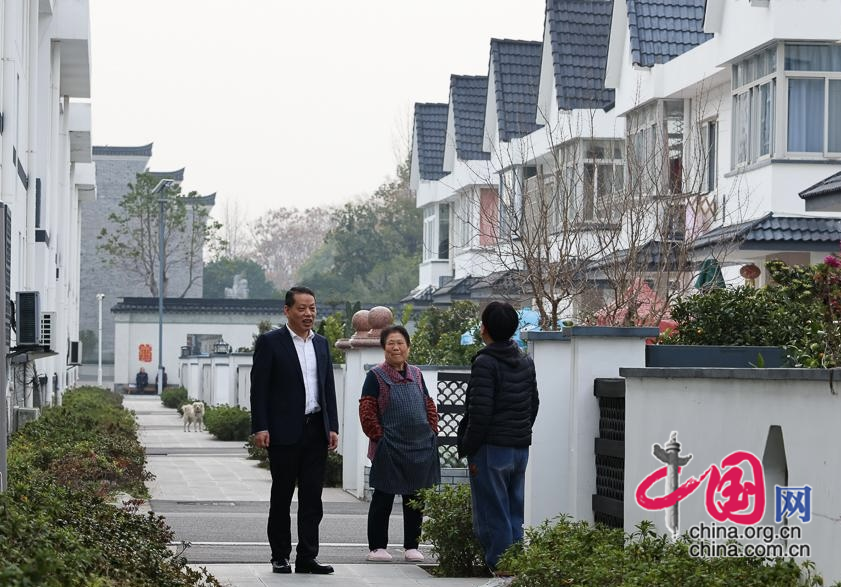
Fu Pingping is talking to the villagers. Photo by Dong Ning from china.com.cn
Fu Pingjun's vision for Tengtou in 20 years: We proposed "Villages make cities more desirable" at the 2010 Shanghai World Expo. Tengtou in the future will be a fusion of three realms: first, "poetic dwelling" with a beautiful ecological environment and harmonious community; second, "entrepreneurial hotbed" with diverse opportunities and vibrant industries, not just a "retirement home"; third, "smart home" with future community governance models and AI deeply empowering all aspects of production and life.
"By then, our villagers' happiness index, health level and sense of development gain will all reach international advanced standards."
Small as villages are, their responsibilities are great. Fu Pingjun's vision is not only Tengtou's aspiration but also a vivid model of China's rural modernization that can be touched and felt.
Its story is not only the struggle history of a village but also a microcosm of China's rural journey towards prosperity, fairness and sustainability in the new era.


