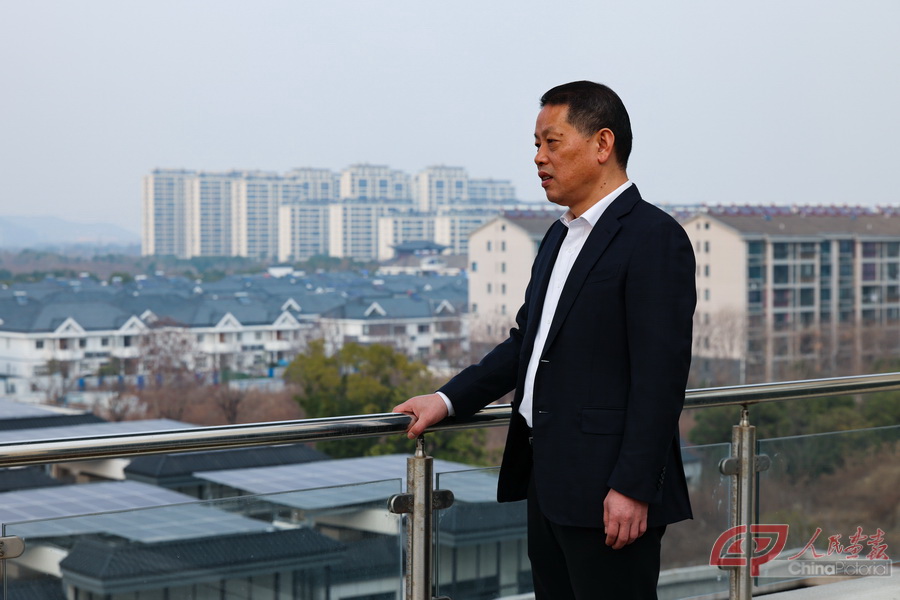
Who is Secretary Pingjun?

Fu Pingjun is Secretary of the Party Committee and Director of the Village Committee of Tengtou Village. His title is followed by a long list of honors: national model worker, outstanding CPC member, delegate to the 20th CPC National Congress, vice president of the China Association of Young Rural Entrepreneurial Leaders, alternate member of the Zhejiang Provincial Party Committee...

How did a village Party secretary achieve such accomplishments? The answer lies in every step he took.

Starting from the grassroots, he built his career through hard work and dedication. After starting work, Fu Pingjun began as a workshop employee, later serving as a village driver, monitor of the driving team, deputy director of the office, and assistant president of the group, making steady progress step by step. During Tengtou's participation in the Shanghai World Expo, he drove back and forth between Shanghai and Fenghua twice a day. It was this spirit of willing to endure hardship and dedicated to learning that made him stand out at the grassroots level.

Daring to make promises and take responsibility, winning trust through actions. In 2006, Fu Pingjun said: "Profits belong to the collective, losses are mine alone." With this promise, he founded the Tengtou Investment Company. These were not empty words. Later, for every project launch and reform in the village, he took the lead. Villagers trusted him not because he was good at talking, but because he truly took responsibility.

Rising to the occasion at critical moments, proving commitment through practical work. On December 3, 2016, former Party Secretary Fu Qiping took sick leave. Fu Pingjun, then deputy Party secretary, took over the post amid the crisis. His approach was simple — take projects as the battlefield and prove commitment through practical work. A number of projects such as the flagship store of Tengtou ecological hotel and the agricultural innovation park were quickly launched and put into operation. Behind such "Tengtou speed" was a village Party secretary who dared to devote himself and deliver results at critical moments.

So, what kind of village Party secretary can go so far?

Fu Pingjun is often called "Secretary Pingjun." This nickname may hold the answer: national model worker, CPC NPC delegate, alternate member of the Provincial Party Committee — titles change, but his dedication to work remains unchanged. Impartial to the masses, no special treatment for himself, and doing everything above average, over time, he has become far above average.

Leaving and Returning: Meeting the Future in Tengtou Village

On early mornings, Tengtou Village is shrouded in tranquility hard to find in cities. For Fu Yinuo, this land is not only his current workplace but also the hometown of his entire childhood and youth.

In 2016, at the age of 18, Fu Yinuo packed his bags, left Tengtou Village in Fenghua District, Ningbo City, and went to Southwest Jiaotong University to study environmental engineering. Later, he pursued a master's degree in urban planning and sustainable development at Hong Kong Polytechnic University, and also worked and interned in Shanghai and Ningbo. Urban experience broadened his horizons and enriched his life choices.

However, after going around, he chose to return to Tengtou Village and work as secretary to the village Party secretary.

"The biggest attraction of returning to the village is hometown affection," Fu Yinuo said. This affection is a concern for the place where he grew up and a simple urge to "do something for it". Against the backdrop of the national rural revitalization strategy, he hopes to apply what he has learned at the grassroots level and build a career in his hometown. His choice has also gained understanding and support from his family.

After returning to the village, the pace of life slowed down. He said that after work, he can spend more time with his family, making family relationships more harmonious. Daily travel, shopping and logistics are almost as convenient as in the city, while avoiding morning and evening rush hour congestion and enjoying calm and peace. In his opinion, rural employment opportunities may be fewer in number than in cities, but they are more stable and suitable for settling down deeply.

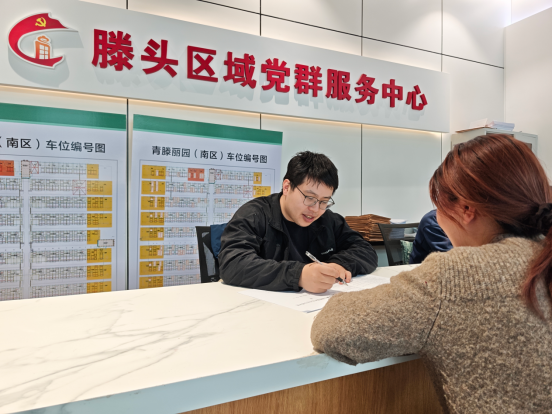
On February 5, Fu Yinuo (left) received villagers at the Tengtou Village Party-mass service center to prepare them for future community resettlement housing renovations (Photo provided by the interviewee).

Unlike Fu Yinuo, Fu Dandan's emotional bond with Tengtou Village gradually became clear and strong only after leaving.

Before going to college in Ningbo, she did not think her hometown village was special. The turning point came at the 2010 Shanghai World Expo. When she and her classmates walked through the magnificent national pavilions, a familiar village name caught her eye — Tengtou Village. This small hometown village even had an independent exhibition hall showcasing its unique development path of "promoting tourism through ecology and nourishing ecology through tourism". On this world-class stage, this small rural pavilion stood out. "I was shocked," she recalled. When her classmates sincerely praised "Your village is amazing!", an unprecedented sense of pride swept over her, making her truly start to look at this familiar land for the first time, and a seed of returning home quietly germinated.

Later, faced with practical considerations such as high urban living costs and unstable housing, the idea of returning home became stronger. Finally, she chose to return to Tengtou.

Today, Fu Dandan is deputy director of the publicity office of Tengtou Village, mainly responsible for editing and reporting the village journal "Tengtou Newsletter". After returning to the village, a feeling became increasingly clear in her heart: the countryside is vast and full of opportunities, and Tengtou Village is a fertile ground for nurturing young dreams.

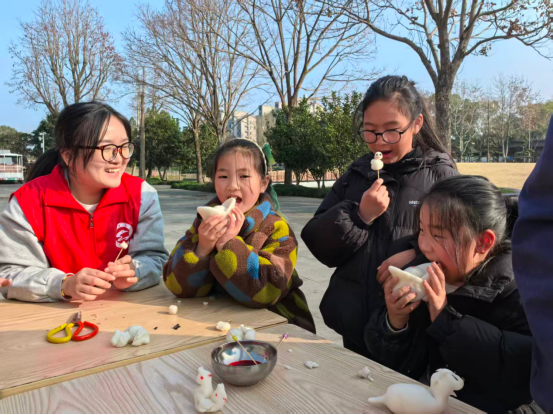
On February 3rd, Fu Dandan (first from the left) volunteered at the Tengtou Village flower rice cake -making experience activity (photo provided by the interviewee)

Fu Dandan introduced that Tengtou's support for young people is not a temporary measure but a long-standing tradition. More than ten or twenty years ago, the village established an annual entrepreneurs' symposium as an initial platform for young people to exchange experiences, voice demands and seek support. Today, the village is actively preparing to establish the Tengtou Entrepreneurs Association, aiming to provide a more systematic and organized development space for young entrepreneurs. As long as young people are willing to improve themselves, the village will spare no effort to support them in skill certification and professional training.

A diversified industrial foundation has paved a broader development track for young people. Fu Dandan introduced that Tengtou's agriculture is transforming towards high-tech, high-quality and high-value-added. At the same time, the village continues to deploy in high-tech fields such as new materials and ecological construction, requiring a large number of young people to join. Of course, the entrepreneurial field is also vibrant: relying on rich tourism resources, projects such as characteristic cafes and Debao recreation park continue to emerge in the village, providing a low-threshold entrepreneurial platform for young people.

In addition, Tengtou's characteristic agricultural products such as rice cakes, fried dough twists and peaches are reaching a broader market through new channels such as live streaming and e-commerce. The core operators of these projects are a group of young people with innovative ideas. "We need more fresh ideas and young blood," Fu Dandan said.

Fu Yinuo has a clear understanding of the talents needed in the countryside today: rural development no longer needs farmers who only work in the fields, but new farmers with professional knowledge, industry insights and professional backgrounds. "Young people with good education and a sincere willingness to take root in the countryside will have boundless prospects if they persevere," he said.

Talking about his future, he hopes to integrate his professional knowledge of environmental engineering and urban planning into rural planning and governance to make his hometown more beautiful and livable. By organizing various cultural and sports events, free medical consultations, condolences and training on electronic equipment use, he will continuously enrich villagers' material and spiritual lives. "I am willing to stay, start from small things, and promote the village to become more harmonious through accumulation bit by bit."

From rushing to cities to returning to the countryside, from being overlooked to being valued, Fu Yinuo and Fu Dandan's identical choices confirm one answer: when the countryside has solid industrial support, a warm cultural environment and broad development prospects, it can become a fertile land for realizing youthful ideals and life values.

In Tengtou Village, this mutual commitment between youth and the countryside is vividly unfolding, promising a bright future.

Why Are Young People in Tengtou Village Bold Pioneers?

Reporters from China Report visited Tengtou Village in Fenghua District, Ningbo City, Zhejiang Province. This village, with an area of less than 2 square kilometers and a registered population of only over 800, has nurtured more than 50 young entrepreneurs. Their annual revenues range from hundreds of thousands to tens of millions of yuan, with a total annual output value exceeding 400 million yuan.

Why can this land nurture such vibrant entrepreneurial vitality?

A New Year "Around-the-Stove Dialogue" Among Entrepreneurs

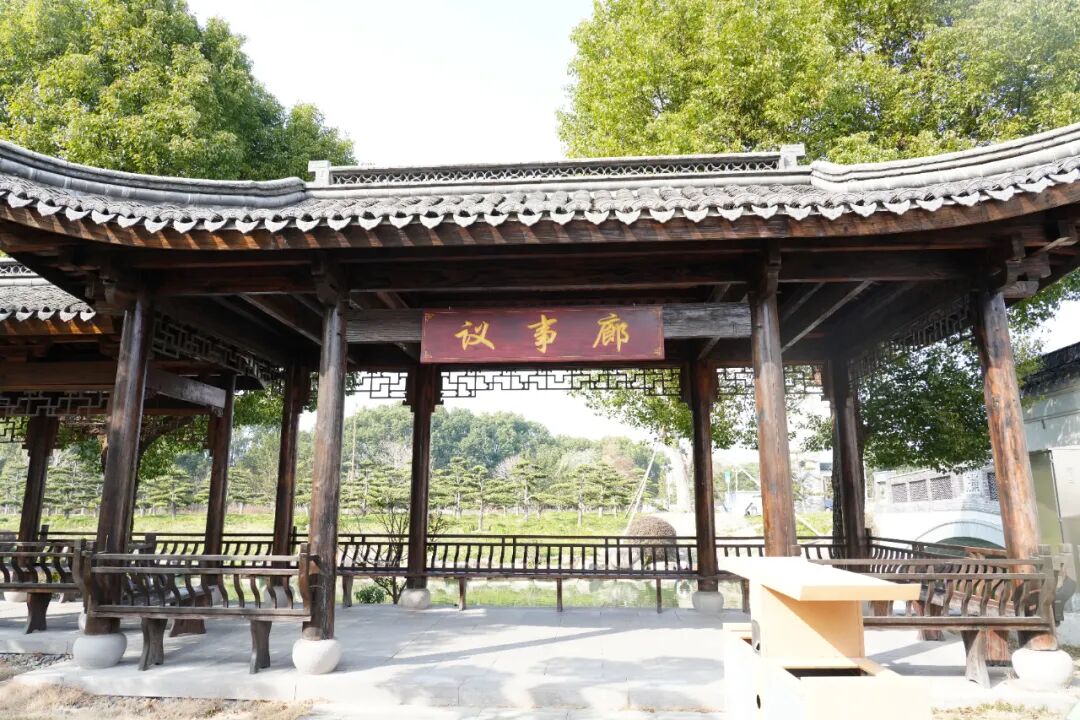
△Tengtou Village's consultation pavilion

There is a tradition in Tengtou Village that has lasted for more than 10 years: from the first day of the Lunar New Year to the Lantern Festival, villagers who start businesses outside gather for a meal and chat on a chosen day. This New Year "around-the-stove dialogue" has become an important occasion for village entrepreneurs to exchange and support each other.

According to Fu Pingjun, Secretary of Tengtou Village Party Committee, it is planned to upgrade this informal gathering to a formal entrepreneurs' association during this Spring Festival to provide stronger support for villagers working outside.

Villager Fu Fangjie has run an optical shop in Ningbo since 1998, with more than 20 years of entrepreneurial experience. Before the pandemic, he participated in the New Year "around-the-stove dialogue" for many consecutive years. "We talk about the past year's situation, share difficulties and experiences," Fu Fangjie recalled, "Many cooperation opportunities emerge from such conversations, and some problems are solved through communication."

Fu Pingjun said that building an exchange platform aims to better serve village entrepreneurs. Many entrepreneurs lack professional knowledge and teams in legal affairs, auditing and taxation. For long-term enterprise development, standardized operation is essential. Led by Tengtou Group, the Tengtou Village economic cooperative has more than 50 subsidiaries and stronger professional enterprise management capabilities. The village collective hopes to provide assistance to entrepreneurs in these aspects.

As the Spring Festival approaches, Fu Fangjie is looking forward to participating in the "around-the-stove dialogue" again to catch up with fellow villagers. Chen Zhexian, deputy Secretary of the Village Party Committee, said that new faces will join this year's gathering, including Fu Shengna.

The Village Collective Provides a Safety Net

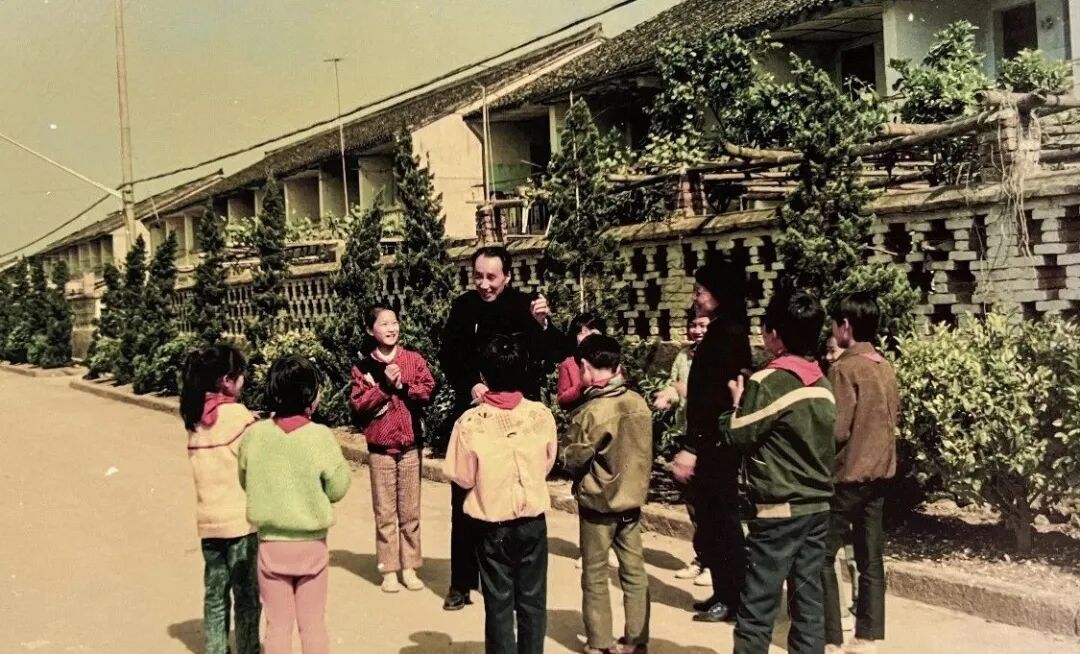
△The first generation of self-built houses in Tengtou Village. Archival photo.

△The second generation of self-built villas in Tengtou Village. Photo by Dong Ning.

Fu Shengna runs a bakery in Fenghua District, Ningbo City, with an annual turnover of about 2.4 million yuan last year. Speaking of her bold decision in 2014 to invest all her savings plus loans to start a business, she said this courage came from the village's guarantees.

In Tengtou Village, villagers receive a monthly welfare fund of 1,500 yuan from birth to death, which increases to more than 4,000 yuan after retirement. "Even if my business fails, I can still save a lot with the welfare fund alone, so I dared to take the plunge," Fu Shengna said.

In the first few years of entrepreneurship, Fu Shengna did not resign. She worked as an accountant in a village collective enterprise during the day and managed the bakery after work. The enterprise leaders not only did not object but also strongly supported her and often introduced orders. Every Double Ninth Festival, the cakes ordered by the village for elderly people celebrating birthdays are all made by Fu Shengna.

Fu Pingjun said that the village's support for young people is divided into three levels: entrepreneurship and innovation are most encouraged, followed by taking public examinations and civil service exams, and returning to work in the village is the last.

Fu Fangjie has worked outside for many years and does not live in Tengtou Village regularly, but because his household registration is in Tengtou Village, his account receives a fixed monthly remittance of 1,500 yuan from the village. In addition, the village pays half of his social security and medical insurance premiums for 15 consecutive years. Fu Fangjie repeatedly emphasized that the village collective's support for young entrepreneurs outside gives him peace of mind.

The village collective's attention and incentives for entrepreneurship have made many young people eager to start businesses. Fu Dandan, who loves coffee, worked in the village committee after graduating from college and is now deputy director of the publicity office of Tengtou Village. She is often urged by colleagues to start a business: "If you open a shop, the village committee will order at least 30 cups every day." Fu Dandan said she will consider entrepreneurship when the time is right.

"Hard work Does Not Guarantee Success, But No Hard Work Guarantees Failure"

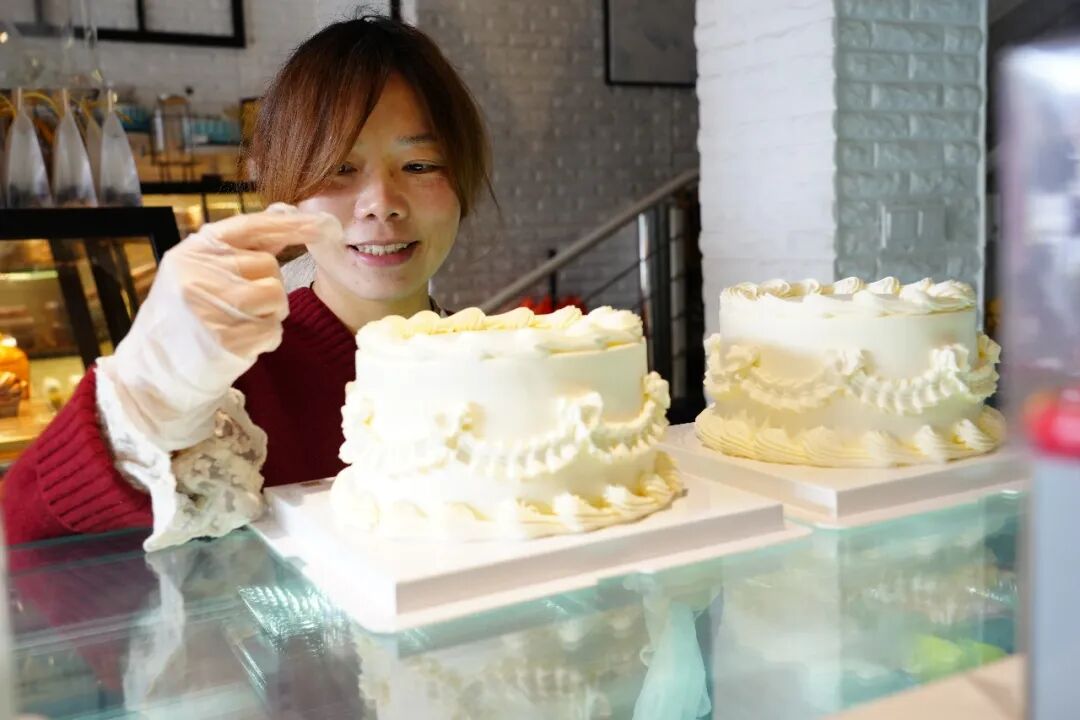
△On February 3rd, Fu Shengna was preparing to attach labels to birthday cakes at a bakery. Photog by Li Shimeng

Fu Pingjun often tells young people: "Choice matters more than hard work. Hard work does not guarantee success, but no hard work guarantees failure." Although living conditions for post-80s and post-90s generations in Tengtou Village are improving day by day, they have inherited the simple business acumen and fearless spirit of struggle from their parents.

Fu Shengna modestly attributes her entrepreneurial success to good luck, recouping her costs in the first year, but the hardships behind it are little known. Before starting a business, she and her husband spent half a year researching the market, visiting bakeries and cafes in surrounding areas almost every weekend. In 2014, she successfully launched her first bestseller — coffee bread, after testing nearly 100 products.

After the bakery business stabilized, Fu Shengna decided to open a second store in 2018, investing about 800,000 yuan at that time. The reason for opening a new store was her sharp observation that the average age of residents in the old urban area was gradually rising, and their consumption capacity for bread and coffee was declining, while young people in the city were gradually moving to the new urban area. Moreover, opposite the new location was a key primary school in Fenghua District, ensuring a stable customer flow.

However, the new store did not achieve the expected results. By then, she had resigned to focus on entrepreneurship. "I was losing money every day," she said. That year was the hardest time for her. She worked until after nine o'clock every night, watching unsold bread have to be thrown away reluctantly.

As the occupancy rate of surrounding communities increased and supporting facilities improved, the store gradually accumulated a stable customer base. During the pandemic, online orders surged instead. At that time, people could not go out, so delivery became a problem. Cake delivery requires high standards, and dedicated delivery is more reliable. Faced with huge market orders, Fu Shengna united several bakeries to quickly form a dedicated delivery team of 5-6 people to ensure cakes were delivered intact and on time.

Today, the daily turnover of her new bakery is between 6,000 and 7,000 yuan, with mostly regular customers. She said she will continue to run the bakery until retirement.

Although she also has a house in Fenghua urban area, Fu Shengna is used to driving back to Tengtou Village more than ten minutes away after closing the shop at nine o'clock every night. It is quieter there, parking is convenient, and she sleeps more soundly.

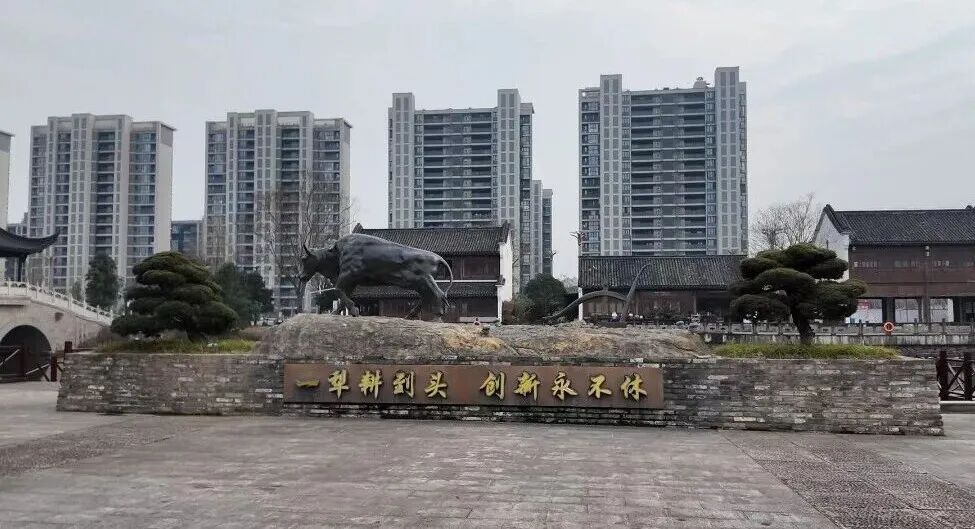
At the main gate at the entrance of Tengtou Village stands a bronze ox statue inscribed with "Plowing forward to the end, innovating endlessly". The older generation in Tengtou forged a bright future under the difficult conditions of "uneven fields, rough roads, grain yield only 200 catties per mu". Today, every young person leaving the village passes by this bronze ox statue and takes this motto to farther places.

△Statue at the entrance of Tengtou Village. Photo by Liu Xueyun

Party Secretaries Set the Example; Party Members Take the Lead

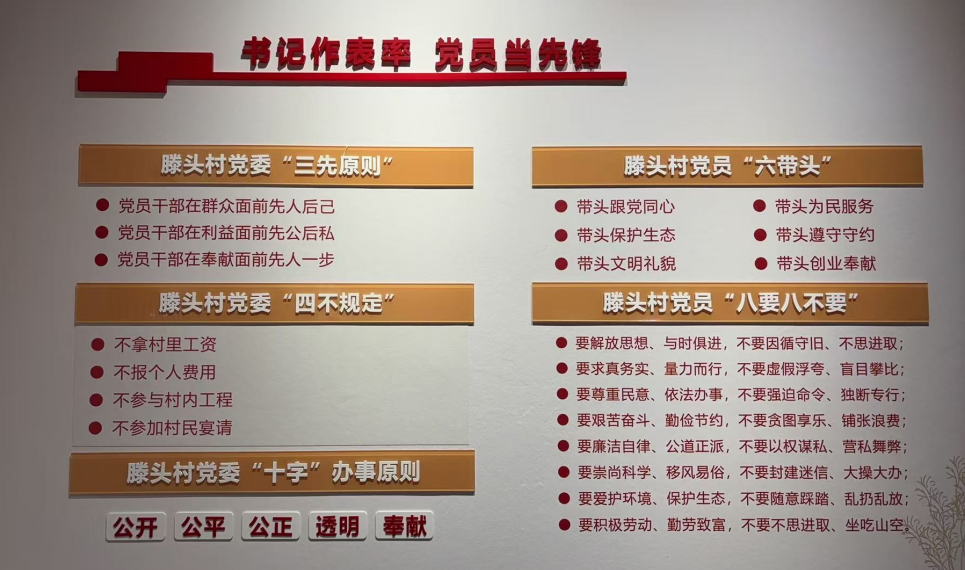
Party leadership and collectivism are Tengtou's "heirloom." Tengtou Village established its Party branch in 1960, which was upgraded to a Party committee in 1994, consisting of one general Party branch and 23 Party branches in total. "Party secretaries set the example; Party members take the lead" is the goal and code of conduct for Party members and cadres in Tengtou Village. The requirements for Party members posted on the village committee wall have gradually expanded from the "Three Firsts" and "Four Prohibitions" to the "Ten-Character" work principles, "Six Leads," and "Eight Musts and Eight Must Nots."

"Three Firsts" of Tengtou Village Party Committee

Party members and cadres put others before themselves when dealing with the masses

Party members and cadres prioritize public interests over personal gain when facing benefits

Party members and cadres take the lead in dedication

"Four Prohibitions" of Tengtou Village Party Committee

No salary from the village

No reimbursement of personal expenses

No involvement in village projects

No attendance at villagers'banquets

"en-Character (five-word) Work Principles" of Tengtou Village Party Committee

Openness, fairness, impartiality, transparency, dedication

"Six Leads" for Tengtou Village Party Members

Take the lead in aligning with the Party and serving the people

Take the lead in ecological protection and abiding by commitments

Take the lead in civility, politeness, entrepreneurship and dedication

"Eight Musts and Eight Must Nots" for Tengtou Village Party Members

Must emancipate the mind and keep pace with the times;

must not stick to old ways and be unmotivated

Must seek truth and pragmatism, act according to one's capabilities;

must not be false, exaggerated or blindly compare

Must respect public opinion and act in accordance with the law;

must not issue arbitrary orders or act arbitrarily

Must work hard and be diligent and thrifty;

must not indulge in pleasure or waste extravagantly

Must be honest and self-disciplined, impartial and upright;

must not abuse power for personal gain or engage in fraud

Must advocate science and change old customs;

must not believe in feudal superstition or hold lavish events

Must care for the environment and protect the ecology;

must not trample casually or litter randomly

Must work actively and strive for prosperity through hard work;

must not be unmotivated or live off one's means

Addressing the Masses' "Three Fears" with Party Members' "Three Firsts"

Rural revitalization hinges on the Party. How to strengthen Party building? Party Secretary Fu Pingjun summed it up in one sentence: The masses have "Three Fears," and Party members must practice "Three Firsts."

What are the "Three Fears"? At the end of 2016, then Party Secretary Fu Qiping fell ill at work. Fu Pingjun took over the post amid the crisis. His first move was to lead the village leadership team to visit every household to understand village conditions and public sentiment. He summarized the masses' mindset as the "Three Fears": fear of losses, fear of unfairness, fear of failure. "Fear of losses" means one's efforts do not yield corresponding returns. "Fear of unfairness" means unfair distribution in the village, harming collective and individual interests. "Fear of failure" means lack of experience, technology, sales channels and market support when starting a business, resulting in wasted efforts.

To address the masses' "Three Fears," Fu Pingjun proposed Party members' "Three Firsts": take the lead in dedication, prioritize public interests over personal gain, and put others before themselves when dealing with the masses.

By addressing the "Three Fears" with the "Three Firsts," Tengtou has found an effective way to strengthen rural Party building.

Take the lead in dedication. "Thoughts might not solve problems; actions yield answers." Only when Party members take the lead can the masses follow suit. Only tangible achievements win the masses' trust.

To take the lead, Fu Pingjun and the Party committee team planned and acted ahead of others. In the first three years of his tenure, a critical period for laying a solid foundation and breaking new ground, he set the goal of "changing every year and transforming greatly in three years." Three years later, Fu Pingjun kept his promise, delivering a perfect performance sheet to the villagers. The Tengtou Holding Group he founded grew from scratch into a key enterprise with annual revenue exceeding 3 billion yuan and profits and taxes totaling over 200 million yuan. Faced with solid achievements, villagers said one after another: "Secretary Ajun is reliable" and "Party members and cadres are trustworthy."

Prioritize public interests over personal gain. When Party members put public interests first, the masses have hope.

The Tengtou Village Party Committee has two effective rules. One is the "Four Prohibitions" for Party members and cadres: no salary from the village, no interference in village projects, no guarantee for any projects, and no attendance at villagers' banquets. The other is the work norms for Party members and cadres: "Fairness, impartiality, openness, transparency, dedication". In 2021, the village launched the "Future Community" construction, with dilapidated house demolition and resettlement housing construction as a key task, involving the interests of all villagers. The initial design plan favored Party Secretary Fu Pingjun's old house. After learning this, Fu Pingjun directly rejected the favorable plan for himself. All villagers signed the dilapidated house demolition agreement within only five days, entirely out of trust in Party members and cadres who prioritize public interests over personal gain. In early 2025, resettlement housing construction was completed, and villagers happily moved into new homes. The entire process of house demolition, construction and allocation was a successful practice of whole-process people's democracy, and an outstanding achievement of Party members and cadres prioritizing public interests, villagers' understanding and cooperation, and sound village governance.

Tengtou Village: Creating Opportunities to Attract Talents

Talent is the biggest variable and also the biggest increment for rural revitalization. What to do without talent? Tengtou people have their ways.

First, attract talents. Spare no effort to introduce talents, focusing on professional managers and technical talents. The small village of Tengtou has attracted more than 20 CEOs and gathered more than 200 college graduates to start businesses in the countryside.

Second, nurture local talents. Spare no effort to activate local talents, focusing on establishing and improving independent entrepreneurship mechanisms. Tengtou, a village with fewer than 300 laborers, has more than 50 independent entrepreneurs. They run factories and shops, travel all over the country, and become the first to get rich in Tengtou.

Third, cultivate future generations. As early as 1989, Tengtou established a talent cultivation reward fund, rewarding students admitted to universities, master's and doctoral degrees with 10,000 to 50,000 yuan. So far, it has rewarded 3 doctoral students, 31 master's students and more than 100 university graduates, with total bonuses exceeding 2 million yuan.

A Train Runs Fast Only if the Engine Leads

Looking back on the development history of Tengtou Village, Party building has always been the core driving force behind its growth.

Since the establishment of the village Party branch in 1960, three successive Party secretaries have taken on challenges one after another, vividly interpreting the profound meaning of "A train runs fast only if the engine leads."

The first Party secretary Fu Jialiang said "The poorest follow me," leading villagers to improve soil and reclaim farmland. The former Party secretary Fu Qiping took the lead with the commitment "Give me the worst fifty mu of land." "The current Party secretary Fu Pingjun lost 15 kilograms through hard work, promoting the village to achieve the basic goal of "changing every year and transforming greatly in three years." The three Party secretaries have no blood relations but share a common commitment. With stable tenures, outstanding moral integrity and competence, and grassroots experience, they have ensured the consistent implementation of Tengtou's development plans.

Meanwhile, 258 Party members in Tengtou Village have turned the General Secretary's instructions into action, making the Party organization a strong fortress for rural revitalization.

A Day in the Life of Fu Pingjun, Secretary of Tengtou Village Party Committee, Practicing Rural Revitalization

On January 5, the 18th day of the twelfth lunar month, reporters tracked the daily work of Fu Pingjun, Secretary of Tengtou Village Party Committee in Ningbo, Zhejiang Province, to explore the driving force behind Tengtou Village's development.
Focus on Ecological Agriculture Development

Time: 1:30 PM – 2:30 PM

Location: Agricultural Industrial Incubation Park

Theme: Stimulating Innovation and Entrepreneurship

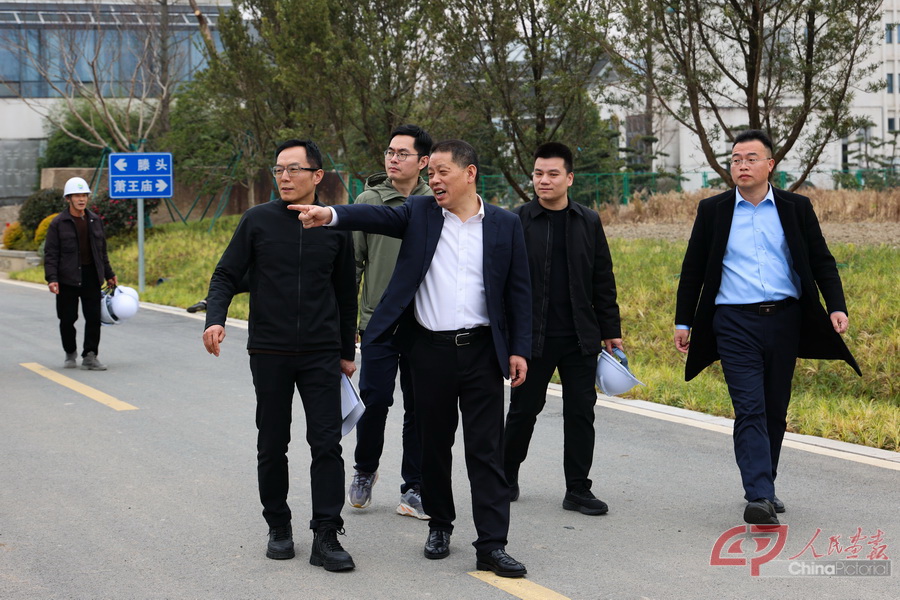
"This is our village's future and the guarantee for the sustainable development of the whole village." As soon as he entered the village in the afternoon, Fu Pingjun went straight to the agricultural industrial incubation park and told reporters.

As a model for rural revitalization, Tengtou Village has achieved win-win economic and ecological benefits for villagers through ecological agriculture development, forming a characteristic industrial pattern based on tourism and ecological agriculture. To explore more new industrial models and provide an innovative soil for agricultural entrepreneurs, the village started construction of the agricultural industrial incubation park in 2023. After three years of careful construction, it successfully passed project acceptance in early February 2026 and is about to be officially put into operation. Fu Pingjun regards this project as a key initiative for Tengtou Village to stimulate innovation and entrepreneurship and achieve rapid industrial upgrading.

"We must complete the final work of the park before the Spring Festival, ensuring both project quality and safety inspections, so that entrepreneurs can settle in smoothly after the festival." Targeting shortcomings in project investment attraction, Fu Pingjun instructed staff on-site to coordinate with relevant departments, sort out preferential policies, build an entrepreneurship service platform, and also required them to improve park environmental sanitation and ensure safety during the Spring Festival.
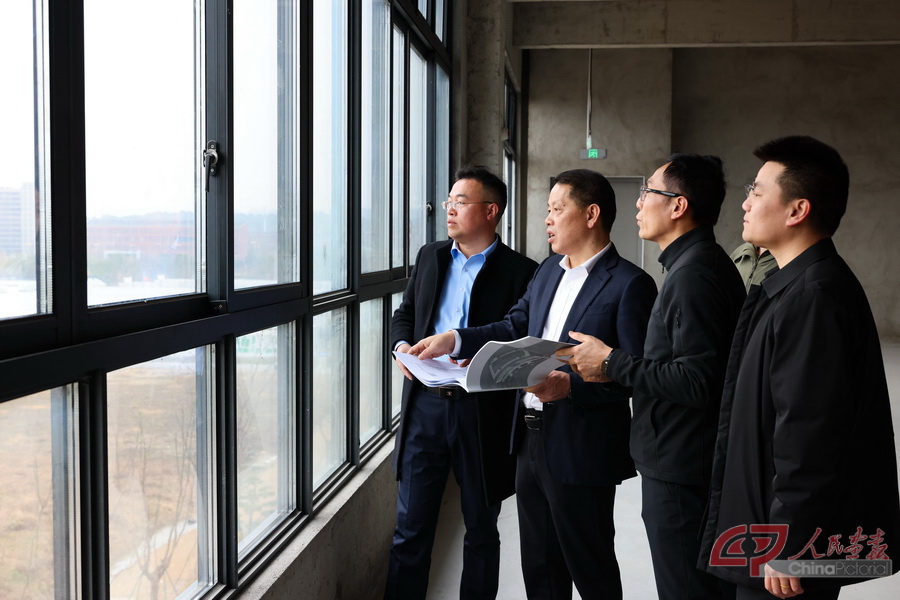
"The agricultural industrial incubation park is a key platform for us to deepen ecological agriculture development and an important carrier to stimulate innovation and entrepreneurship, which is related to Tengtou Village's sustainable development." Under the planning of the village Party committee led by Fu Pingjun, attracting many renowned agricultural enterprises and research institutions to settle in the park will help Tengtou Village form a complete ecological agricultural industrial chain.
Promote Energy Conservation and Emission Reduction

Time: 2:50 PM – 3:50 PM

Location: Fifth Floor Meeting Room of the Village Committee

Theme: Negotiate Construction of Clean Energy Power Project

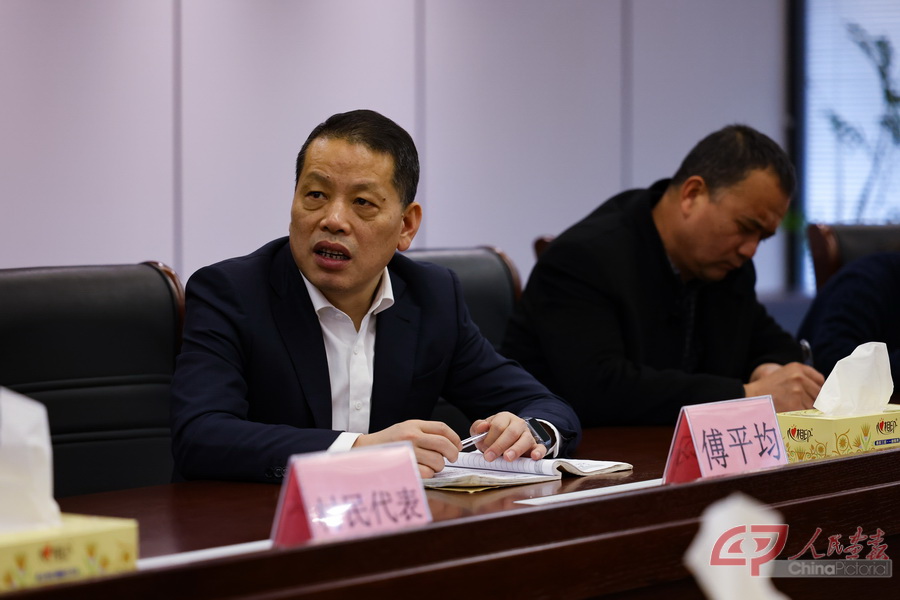
After leaving the agricultural industrial incubation park, Fu Pingjun immediately returned to the Tengtou Village Committee, where people had been waiting for a long time.

"Will the wind turbine blades be too low, posing risks to residents and children?" "Will the style of new energy lamps match the overall environment of residential areas?" "What effective measures can be taken to minimize the impact of construction on villagers' lives?”...

At the Tengtou Village Committee, Fu Pingjun presided over a construction negotiation meeting for the clean energy power project. The project was about to enter the construction phase. To address villagers' concerns about construction, the village committee conducted household surveys, and the issues raised at the meeting were the focus of villagers' attention. Responsible persons of Dingfeng Energy Technology (Zhejiang) Co., Ltd., as the project designer and constructor, answered villagers' questions in detail and recorded relevant issues.
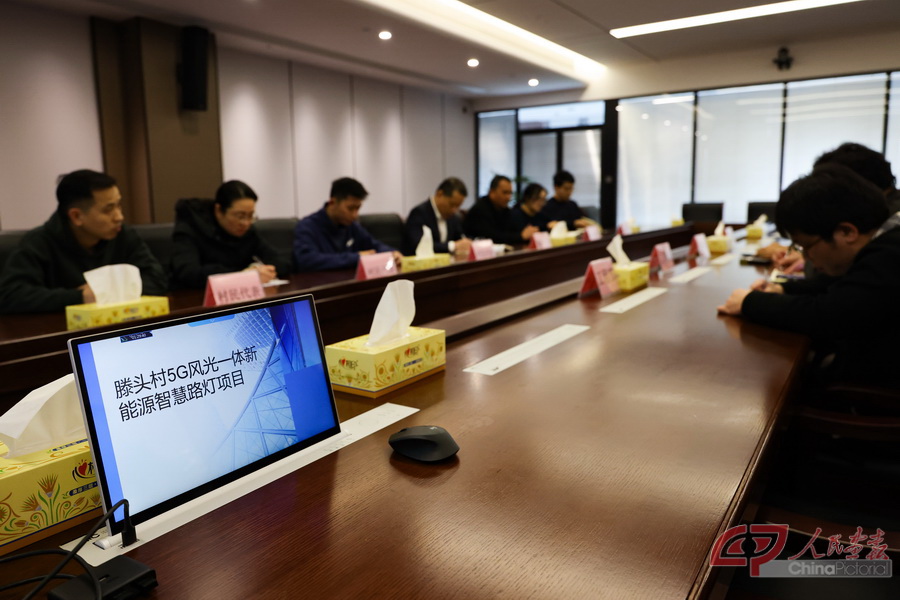
At the end of January, the Tengtou Village Committee signed the strategic cooperation agreement for the 5G integrated wind-solar smart street lamp project with Dingfeng Energy Technology (Zhejiang) Co., Ltd. According to the agreement, the project will start construction immediately after the Spring Festival and be completed by mid-2026, focusing on breeze power generation technology. The new clean energy lamps will be installed in the agricultural, cultural and tourism area on the west side of Tengtou Village. The project is expected to generate 9.9 million kWh of electricity annually, equivalent to saving about 3,972 tons of standard coal and reducing carbon emissions by about 9,900 tons per year.

"After the project is put into operation, the village's electricity costs will be significantly reduced. However, due to the long construction period and large investment scale, a detailed and thorough construction plan must be formulated to minimize the impact of construction on the village's environment and villagers' lives." Fu Pingjun said that the clean energy power generation project is a new attempt for Tengtou Village's ecological and environmental protection work, marking the beginning of large-scale energy diversification in the village.
Consolidate Industrial Development Foundation

Time: 3:50 PM – 5:00 PM

Location: Party Secretary's Office

Theme: Negotiate Enterprise Cooperation

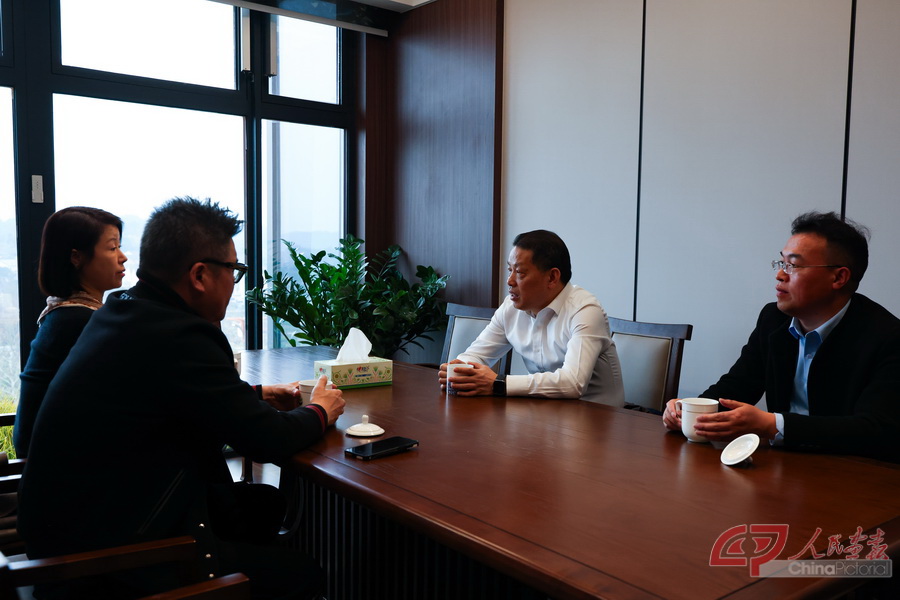
Before the construction negotiation meeting ended, village committee staff were waiting anxiously outside the meeting room for Fu Pingjun, as new visitors had arrived in Tengtou Village. This time, the visitors were a well-known local catering enterprise in Ningbo — Qingjiamu Restaurant Food Co., Ltd. As soon as the meeting ended, Fu Pingjun walked quickly into the office and started negotiations directly. The atmosphere in the office was pragmatic and enthusiastic.

Qingjiamu Restaurant (Chic Mom's Kitchen) specializes in Ningbo cuisine. Since opening its first store in Ningbo in 2020, it has opened more than 20 stores in Shanghai, Jiangsu, Zhejiang and other regions. This time, it hopes to deepen strategic cooperation and expand market share by leveraging Tengtou Village's ecological advantages and brand influence.

For a long time, adhering to the concept of village-enterprise co-construction and shared benefits, Tengtou Village has made investment attraction a key starting point to promote rural industrial upgrading and achieve common prosperity. Leveraging ecological advantages and the chain-style Tengtou development model, it actively connects with high-quality enterprises, builds cooperation platforms, and promotes the integrated development of industries from ecological agriculture and rural tourism to diversified integration. At the same time, by activating idle resources and improving supporting services, it provides comprehensive guarantees for cooperative enterprises, striving to achieve win-win outcomes for both villages and enterprises, positioning enterprises as the main force of rural revitalization.

"Industrial revitalization is the foundation and key to comprehensive rural revitalization, and an important carrier for villagers' employment and happy lives. By introducing many promising industries and enterprises, we can further consolidate the foundation of industrial development and boost rural revitalization." Fu Pingjun said.
Focus on Elderly Care Services

Time: 5:10 PM – 6:30 PM

Location: Villager's Home

Theme: Visit and Offer Care

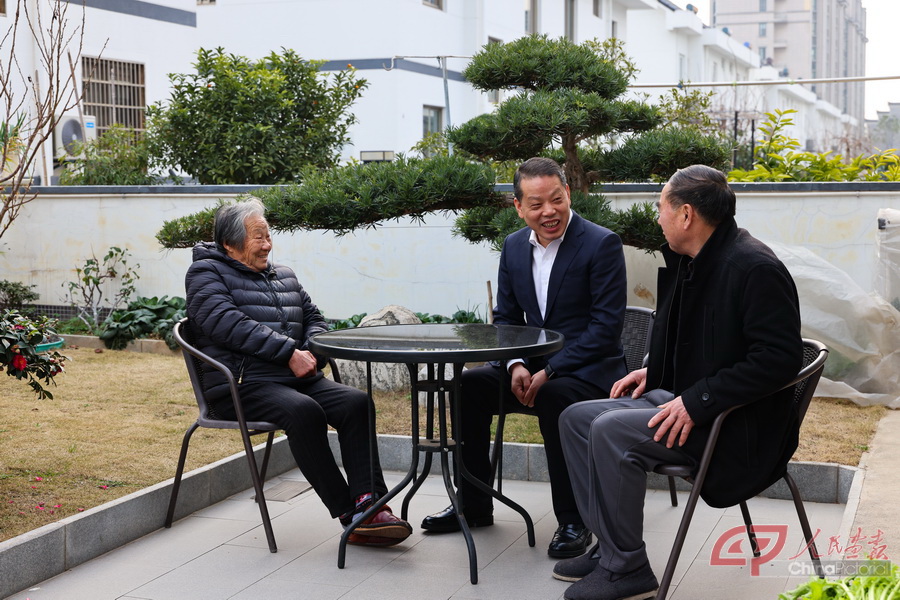
"Uncle Fu, I've come to see you. The Spring Festival is approaching, how are you doing?" As soon as he entered the house, Fu Pingjun put down the rice, flour and warm supplies he brought, walked quickly to the nearly 70-year-old couple Fu Huaen, sat with them on the sofa, and asked in detail about their daily diet, medical treatment and medication.

Tengtou Village has more than 800 registered villagers, about 30% of whom are elderly aged 60 and above. How to enable the elderly to enjoy their old age and promote the traditional virtue of respecting the elderly in the village has always been a concern of the Tengtou Village Committee. As the Spring Festival approached, the village committee launched Spring Festival greetings and condolences, caring for the elderly with warm words and practical actions.

Over the years, to improve the quality of life of the elderly, Tengtou Village has established systems such as social elderly care and cooperative medical care. In addition to purchasing endowment insurance for the elderly and distributing a monthly welfare fund of 1,500 yuan, Tengtou Village also established the province's first village-level elderly fund — Evergreen Elderly Fund in 2019 with villagers' voluntary donations of 13.07 million yuan. The fund's income is used for elderly condolences, physical examinations and living security services. At the same time, Tengtou Village has built professional venues for cultural and sports activities in residential areas and introduced social forces to provide more professional and diverse activity options for the elderly.
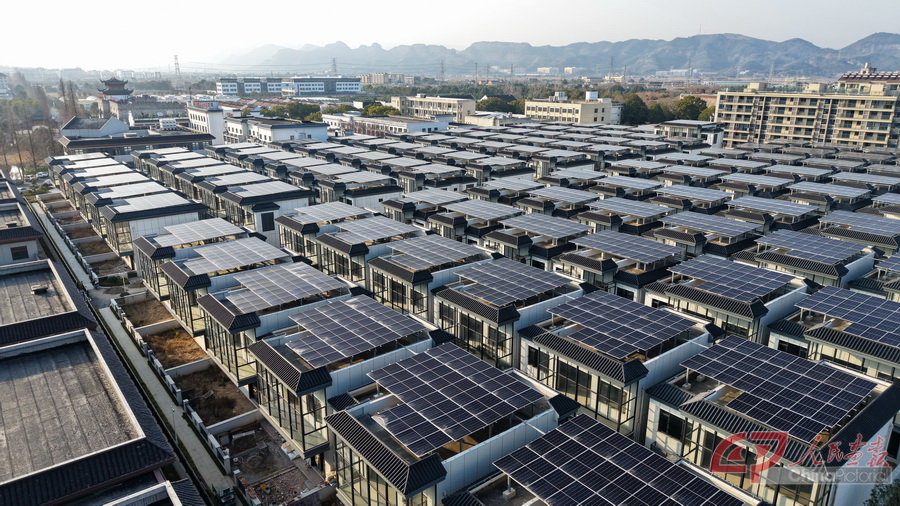
"Ecological agriculture, energy conservation and emission reduction, diversified industries and elderly care services are the key work focuses that Tengtou Village has adhered to for many years. These are related to the sustainability of rural revitalization and common prosperity."
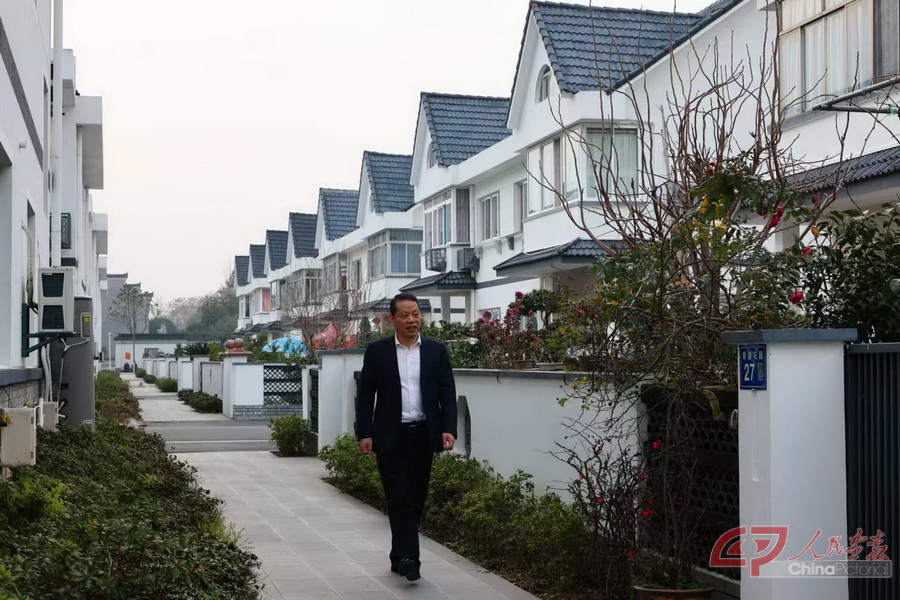
As night fell, Fu Pingjun returned to the office tiredly. Without rest, he began to sort out the work for the next day. Having worked in Tengtou Village for more than 30 years, especially since becoming the leader of the whole village, busyness has become the norm. It is precisely this dedication and perseverance that have driven Tengtou Village's development forward. In 2025, the total social output value reached 13.535 billion yuan, and villagers' per capita net income increased to 89,000 yuan. It has won more than 70 national honors and become a model village for beautiful rural development in China.
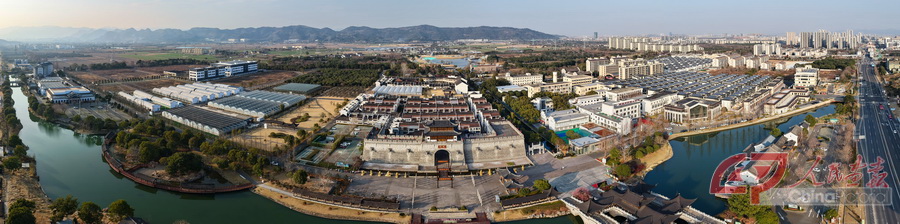
Written by Zhong Yatu, Quan Jingyi, Photo by Dong Ning