
新春走基层丨阔时节上看民族新年


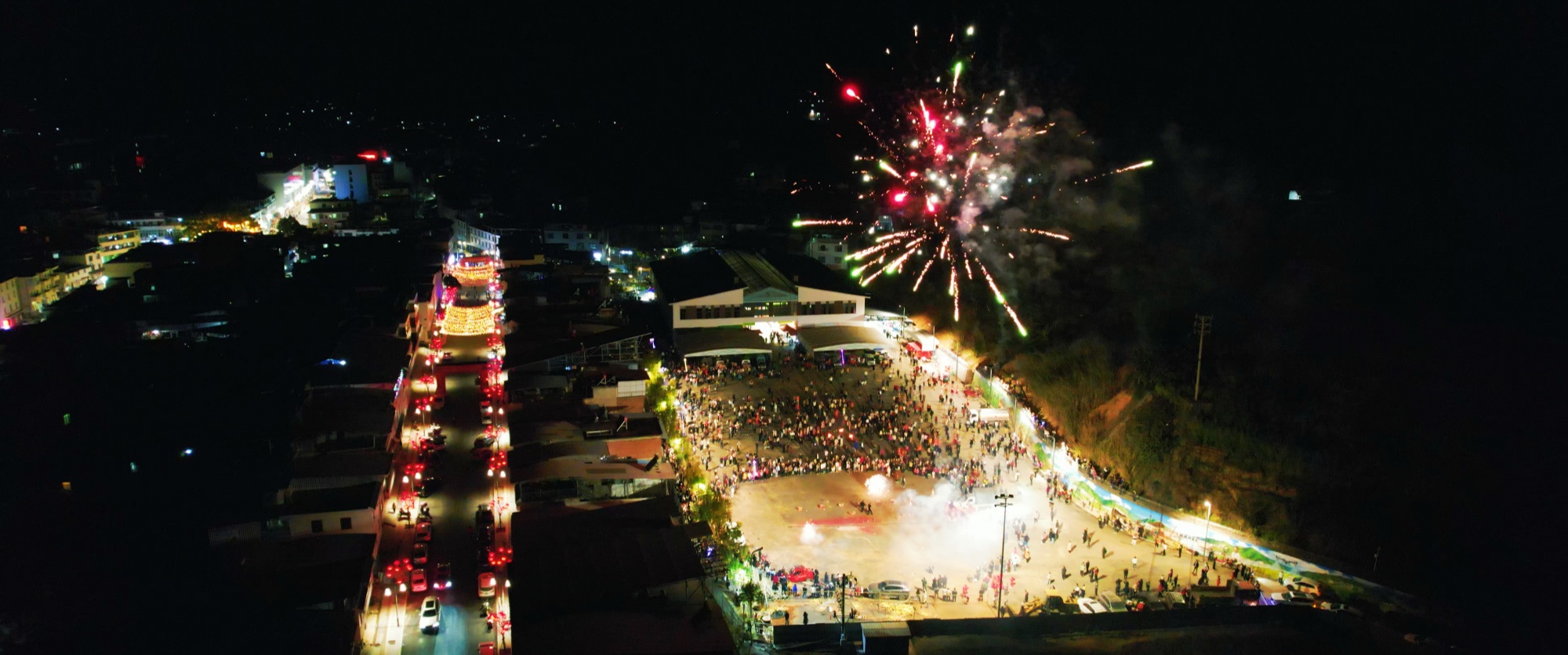
盐边县永兴镇人头攒动,街头被颜色“妆点”,夜晚烟火气夹杂着鞭炮声,让年味浓了起来。
Yongxing Town in Yanbian County, was bustling with people. Vibrant hues adorned the streets as Lisu women dressed in colorful ethnic costumes, and as night fell, the lively hum of life blended with the crackle of firecrackers, infusing the air with a strong festive spirit of the Kuoshi Festival.
第一章:集结
The Gathering
天还没亮,蔡华已经在镇政府前等候,准备和记者一起上山接村民。
Before dawn broke, Cai Hua was already waiting in front of the town government, ready to head up the mountain with journalists to pick up the villagers.
记者:您好,您好。
Journalist: Hello! Hello there!
蔡华:辛苦了,辛苦你们了!咱们这就准备上山……
Cai Hua: You've had a long trip. Thank you for coming! Let's get ready to head up the mountain right away...
蔡华家在密地萝组,离镇里有四十多分钟的车程。天空露出鱼肚白,车缓慢停下,蔡华下车打电话通知村民来神树下汇合。
Cai's home is in Midiluo village group, a forty-minute drive from the town. As the sky turned pale with the first light of dawn, the car slowed to a stop. Cai got out and made a phone call to tell the villagers to gather by the sacred tree.
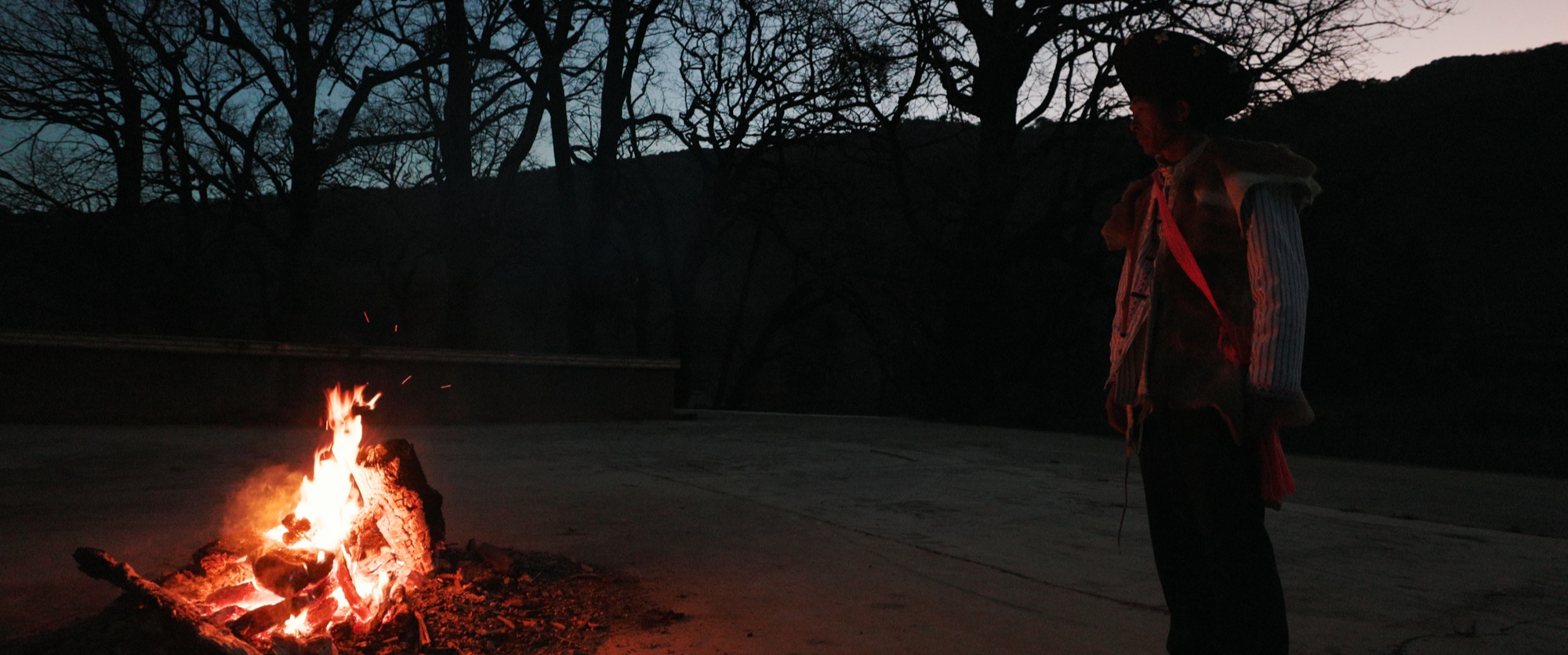
大家围坐在篝火旁取暖,渐渐地,篝火旁三三两两聚起人来,葫芦笙随之而起,村民围着火堆跳了起来。
Everyone sat around the bonfire to warm themselves, and gradually, more and more people came in small groups. The sound of the hulusheng free-reed mouth organ started up, and the villagers rose to dance around the fire.
蔡华说,今年是举办阔时节庆祝的第12年,以前都是在组里办,今年是第一次下山到镇上办,但神树下的仪式不能少。
Cai said that this year marked the 12th year of holding the Kuoshi Festival celebrations. In previous years, the festival was held in the village, and this was the first time it was being held down in the town -- but the ritual by the sacred tree could never be skipped.
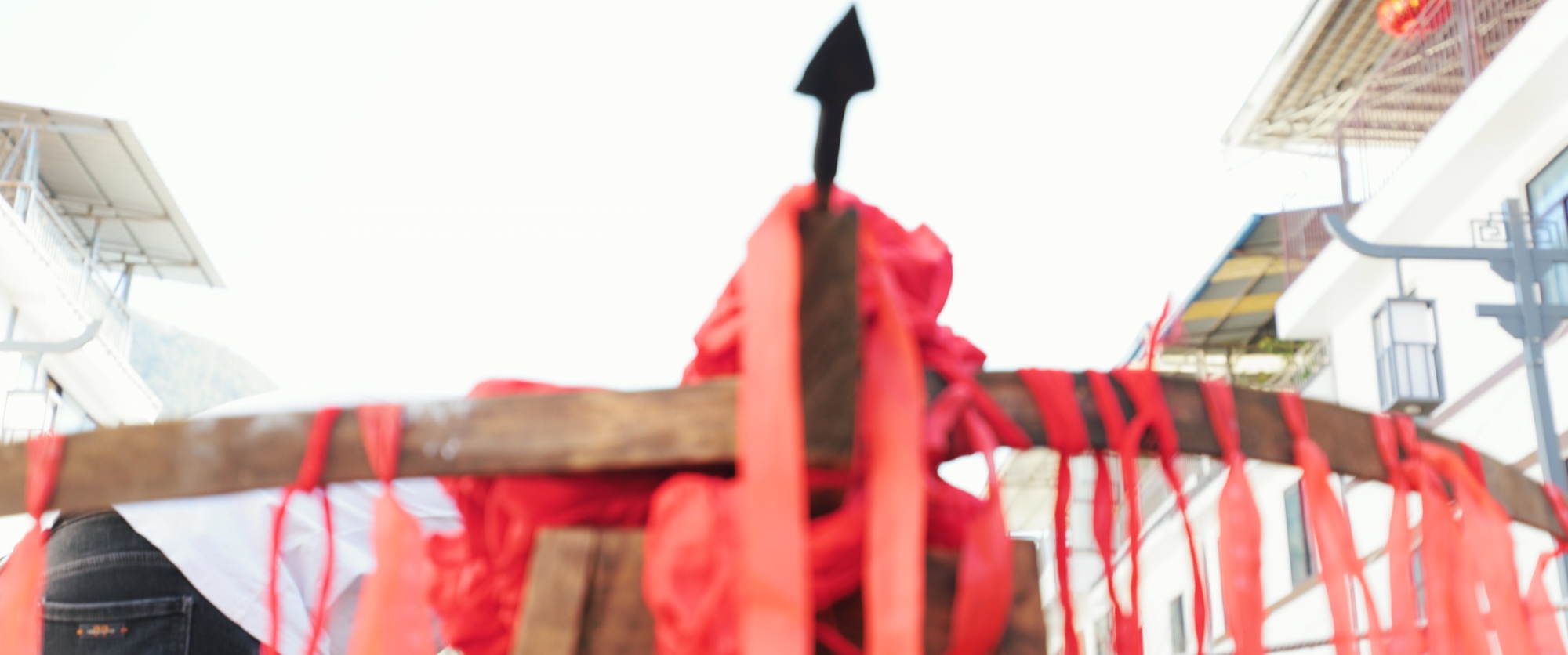
(记者:向祖先“汇报”一年的收获,祈求来年的馈赠。)
Journalist: They report the year's harvests to their ancestors and pray for their blessings in the coming year.
第二章:阔时节
The Kuoshi Festival
蔡华是密地萝组的组长,也是本次阔时节活动的组织者。永兴镇在地理上与云南交界。今年的节日上,蔡华也邀请了不少从云南过来的同族表演才艺,希望充分展示出傈僳族传统文化。
Cai is the head of Midiluo village group and also the organizer of this year's Kuoshi Festival. Yongxing Town borders Yunnan Province geographically, and for this year's festival, Cai invited many fellow ethnic clansmen from Yunnan to perform, hoping to fully showcase the traditional culture of the Lisu people.
阿石才:我们傈僳族叫葫芦笙,现在我首先吹云南金沙江过去的调子。刚才“脚步”你们看到我是一直走,他们是往后蹬一点。所以他们就说,你们走了,还要回来(回故乡)的意思。
Ashicai: We Lisu people call this the hulusheng. Right now, I'm playing a tune passed down from the other side of the Jinsha River in Yunnan. You saw my steps just now -- I kept walking forward, they step back a bit. It symbolizes that even when you leave, you will always come back to your hometown.
蔡学珍:我是从云南华坪来的,参加四川永兴镇阔时节。我们傈僳族古老千年流传下来的(舞蹈),手拉手,男男女女、老老少少,可以一起跳。干活的有干活的(舞蹈),谈情说爱的有谈情说爱的(舞蹈)……
Cai Xuezhen: I'm from Huaping in Yunnan, and I've come to join the Kuoshi Festival in Yongxing Town, Sichuan. This dance has been passed down among us Lisu people for thousands of years. We hold hands -- men and women, the young and the old -- and dance together. There are dances for working in the fields, and dances for courtship...
谷艳:我侄女穿的这一套是比较复古的,而我这一套是比较现代的。衣服传说是采七十七座山的花朵制成的,这里面是我们的衣心;白色跟红色的条纹代表着傈僳族走过的山川和河流。
Gu Yan: The outfit my niece is wearing is a more traditional vintage style, while mine is a modern take. Legend has it that our traditional clothes are made with flowers picked from seventy-seven mountains -- these flowers are the heart and soul of our garments. The red and white stripes represent the mountains and rivers the Lisu people have traveled through.
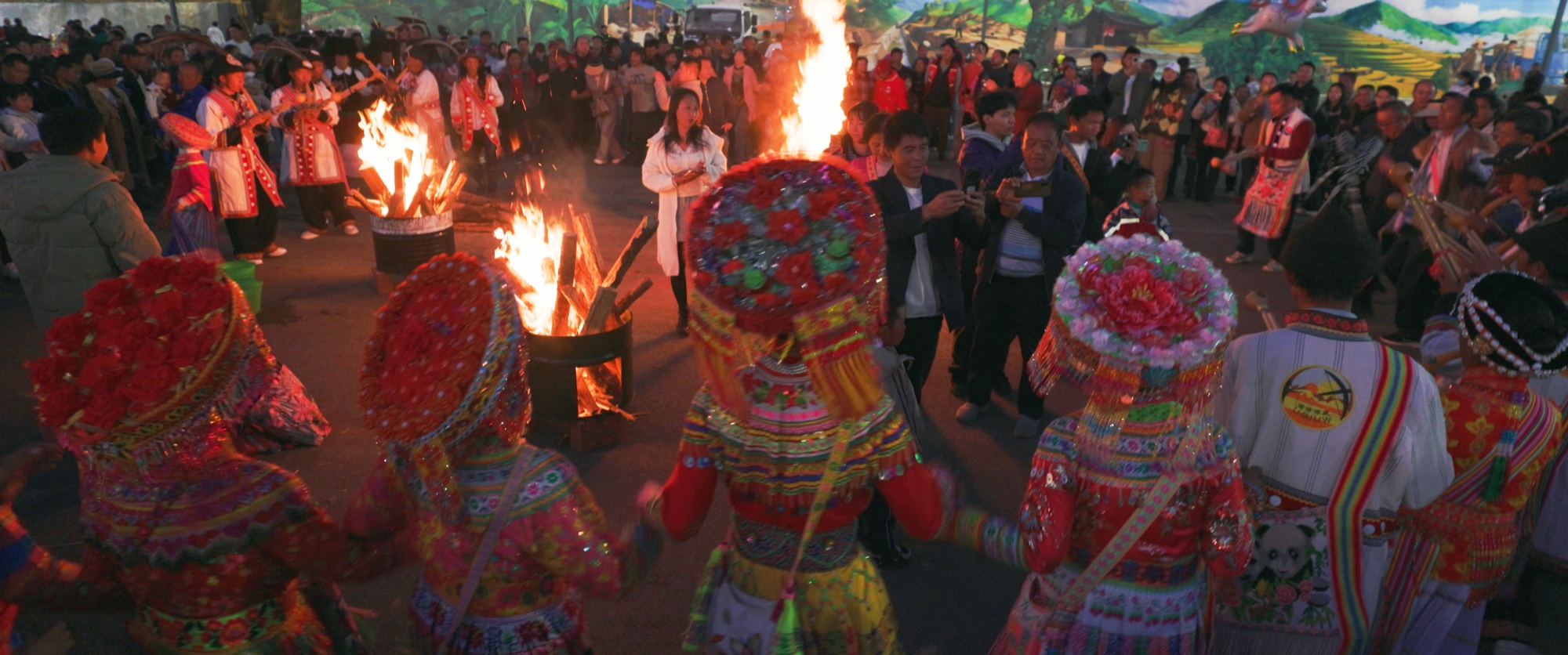
第三章:篝火
The Bonfire
盐边牛肉、泡菜鱼……傍晚时分,长街宴正式开席,各族人民不分你我,把酒言欢。
Yanbian beef, pickled fish... As evening came, the long street banquet officially began. People of all ethnic groups sat together, toasting and chatting joyfully, as one big family.
宴席刚结束,坝子上弥漫的劈柴香和傈僳族骨子里律动的基因,把人们吸引过来。不一会儿,大家便自然而然地应和着节拍,踏起了整齐的舞步。围着篝火跳舞,加入的人越多,圈圈也越大——坝子不够,就大圈套小圈,将欢乐的气氛推向高潮。
As soon as the banquet ended, the sweet scent of burning firewood floating over the open ground and the innate love for rhythm deep in the Lisu people's bones drew everyone over. In no time, people naturally moved in time to the beat, stepping in neat dance moves. The more people joined the bonfire dance, the bigger the circle became -- when the open ground was not enough, they formed big circles enclosing small ones, sending the joyful atmosphere to its climax.
傈僳语中的“阔时”意为“新年”,阔时节相当于汉族的“春节”,是傈僳族传统文化的集中体现。今天,阔时节的形式与内容不断丰富,参与面也逐渐扩大,这离不开傈僳族人民热情好客、不排外的民族性格。这欢乐祥和的节庆,也是铸牢中华民族共同体意识的生动体现。
In the Lisu language, "Kuoshi" means "New Year." The Kuoshi Festival is equivalent to the Spring Festival for the Han people and is a concentrated embodiment of the Lisu people's traditional culture. Today, the forms and contents of the Kuoshi Festival are constantly enriched, and its reach is expanding -- this is all thanks to the Lisu people's warm, hospitable and inclusive ethnic character. This joyful and peaceful festival is also a vivid reflection of consolidating the sense of community for the Chinese nation.
(傈僳语:新年快乐!富贵吉祥!丰衣足食!)
Lisu Language: Happy New Year! May prosperity and good fortune be with you! May you have an affluent life!
Credits
出品人 许荣
Executive Producer Xu Rong
总监制 薛立胜
Production Supervisor Xue Lisheng
监制 戴凡
Co-production Supervisor Dai Fan
制片人 杨丹
Producer Yang Dan
主编 宋若冰
Chief Editor Song Ruobing
编导 孙磊
Writers and Directors Sun Lei
摄像 孙磊
Videographer Sun Lei
后期编辑 孙磊
Video Editor Sun Lei
鸣谢
Acknowledgements
攀枝花市盐边县文化广播电视和旅游局
Bureau of Culture, Radio, Television and Tourism, Yanbian County, Panzhihua City
攀枝花市盐边县永兴镇人民政府
The People's Government of Yongxing Town, Yanbian County, Panzhihua City

客户端中查看

手机中查看
分享